Ecommerce Growth Case Study: Dallas Parrots
Monthly revenue grew from approximately $40K to approximately $126K within one year through a connected mix of website improvements, SEO, Google Ads, Meta Ads, ecommerce management, phone bookings, customer follow-up, and sales process improvements.
This was not the result of one campaign or one channel. The growth came from improving the complete customer journey.
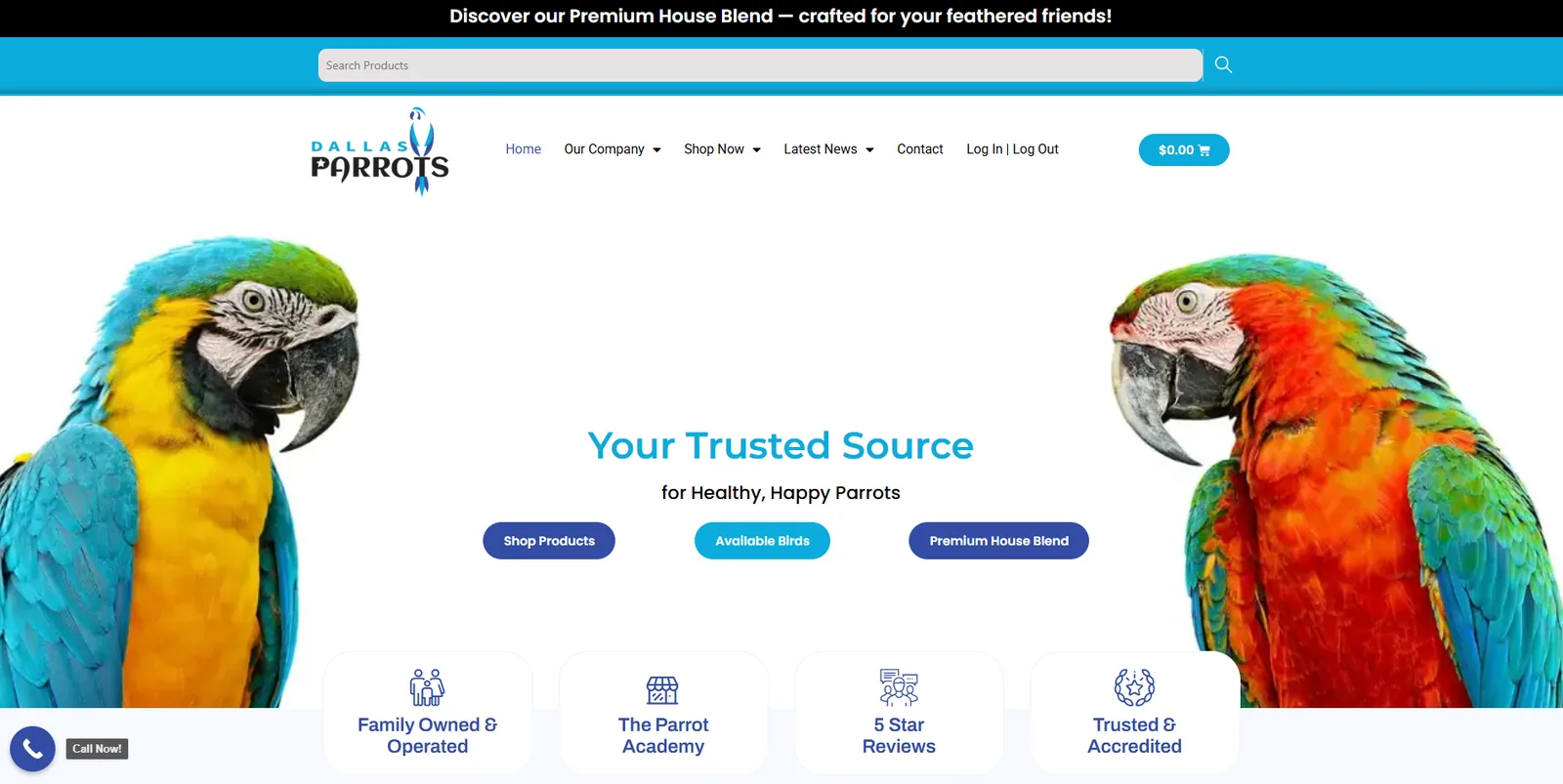
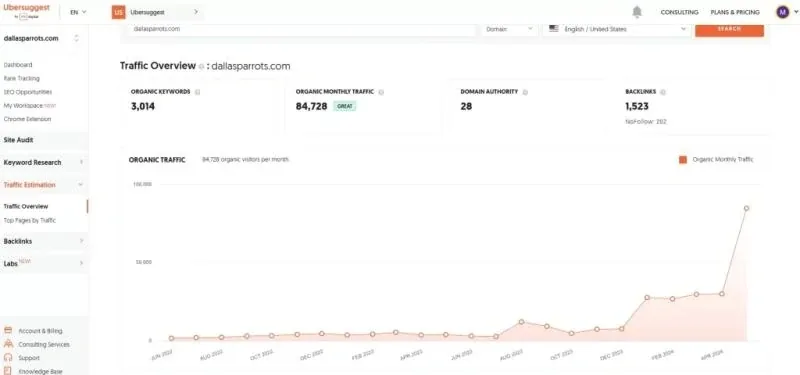
Approximately $40K to $126K in monthly revenue.
One figure, stated the way the business measures it. A monthly revenue comparison taken about a year apart, not a projection and not a channel metric.
before the connected system
after the connected system
PeriodWithin one yearBasisApproximate monthly revenue comparison
This was a multi-channel business result supported by website improvements, SEO, Google Ads, Meta Ads, ecommerce management, phone bookings, customer follow-up, CRM improvements, and sales process changes. No single channel produced it, and no month is claimed to have repeated it exactly.
The revenue figures come from the client ecommerce sales report. That report lists customer names and order level financials, so it is not published here in any form
Improving the complete path from discovery to purchase.
Dallas Parrots serves customers through ecommerce, product enquiries, local discovery, paid advertising, and phone-assisted sales.
The work required more than attracting traffic. The website, campaigns, product experience, enquiries, calls, follow-up, and ecommerce operations needed to support the same customer journey.
The path the work had to support
- 01Search and social
- 02Google and Meta Ads
- 03Website
- 04Product or enquiry
- 05Online or phone sale
- 06Follow-up
Growth was spread across several customer journeys.
A parrot is a considered purchase. Some customers complete a standard checkout, some want a question answered first, and some will only buy after a conversation. The strategy had to improve all of those paths rather than pick one.
Online purchase
- 01Visitor
- 02Product
- 03Decision
- 04Checkout
- 05Order
Product enquiry
- 01Visitor
- 02Product question
- 03Contact
- 04Follow-up
- 05Purchase decision
Phone-assisted sale
- 01Visitor
- 02Call
- 03Availability or advice
- 04Booking or purchase
Local discovery
- 01Search
- 02Website or profile
- 03Call or visit
- 04Sale
The work needed to support each journey without treating the website, advertising, SEO, calls, and follow-up as separate systems
Several channels supporting one commercial outcome.
Eight parts, each doing a different job in the same journey. Read across the top row for how a customer arrives, and the bottom row for what happens once they do.
SEO
Captures product, category, informational, and local search demand.
Google Ads
Captures active commercial intent.
Meta Ads
Supports product discovery, awareness, retargeting, and enquiries.
Website
Explains products, builds trust, captures interest, and supports transactions.
Phone bookings
Supports customers who need help before purchasing.
Customer follow-up
Continues the conversation after an enquiry or call.
Ecommerce management
Maintains the product and customer journey.
Reporting
Shows where attention, enquiries, and sales are coming from where data is available.
Read more about how these layers connect on the marketing automation services page
The website had to support both ecommerce and assisted sales.
Not every customer completes the journey through a standard checkout. Some need product information, availability confirmation, advice, or a phone conversation.
What I managed on the website
- Website management and ongoing technical maintenance
- Page improvements across the storefront and content pages
- Product discovery through search and category structure
- Product page support so a listing answers the obvious questions
- Mobile responsiveness across the buying path
- Product enquiry routes for customers who are not ready to check out
- Calls to action and visible phone contact options
- Trust elements on the pages campaigns send traffic to
- Content updates as products and programs changed
- Conversion path improvements between landing and cart
- Tracking checks where tracking was implemented
The build side is described on the ecommerce website development page
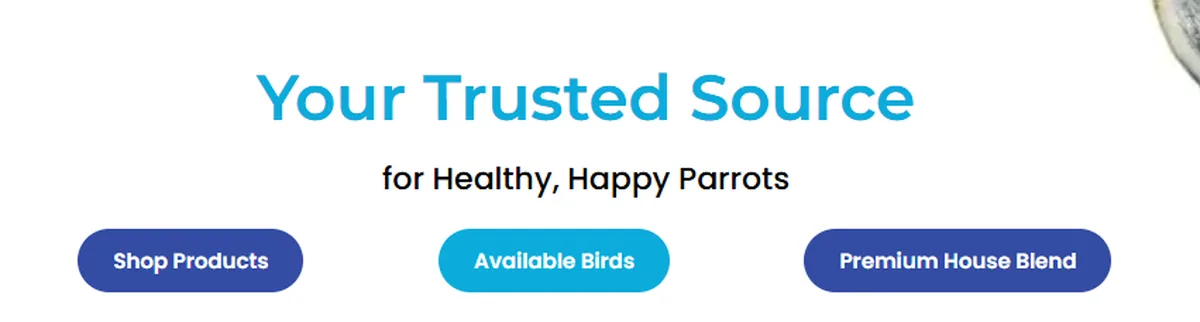


The same page has to serve a customer who checks out immediately and one who wants to speak to somebody first.
Campaign traffic reaches these pages, so the condition of the page affects what the campaign is able to return.
A phone number that is easy to reach on a small screen is part of the conversion path, not a detail.
Helping customers find products and answers through search.
Search demand in this category splits between people looking for a specific bird or product, people researching care and suitability, and people looking locally. The site had to be findable for all three.
The SEO work I ran
- Technical SEO across crawlability, indexing and site structure
- Keyword research across product, category and informational intent
- On-page improvements to titles, headings and copy
- Product page optimization
- Category page optimization
- Content support for research and care questions
- Internal linking between categories, products and content
- Metadata across the templates
- Search Console monitoring
- Local search support
- Ongoing optimization rather than a single pass
This is the same approach described on the SEO and organic growth services page
SEO supported discovery, but the visitor still needed a useful product page, a clear contact option, and a working sales process.
Capturing active product and purchase intent.
Google Ads supported customers already searching for relevant products, categories, or local options. The account ran alongside organic search rather than replacing it.
Ongoing management of the account rather than a launch and leave setup.
Reviewing which terms were worth bidding on for a specialist catalogue.
Reading what people actually typed, which is rarely what the keyword list assumes.
Grouping ads so the message matched the product or category behind it.
Removing traffic that could never convert, so budget stayed on buying intent.
Sending clicks to the page that answered the search rather than the homepage.
Checked where tracking was available, so decisions rested on recorded actions.
Watching pacing and delivery across the account.
Reporting back to the business so the next optimization had a reason behind it.
This channel met customers who had already decided to look. The job was to be present and relevant at that moment.
A search ad is only as good as the product page behind it, which is why the website work ran in parallel.
The Google Ads account has not been exported with spend and cost columns redacted, so no screenshot appears here. Publishing an unredacted capture would expose client budget data.
Supporting product discovery and continued interest.
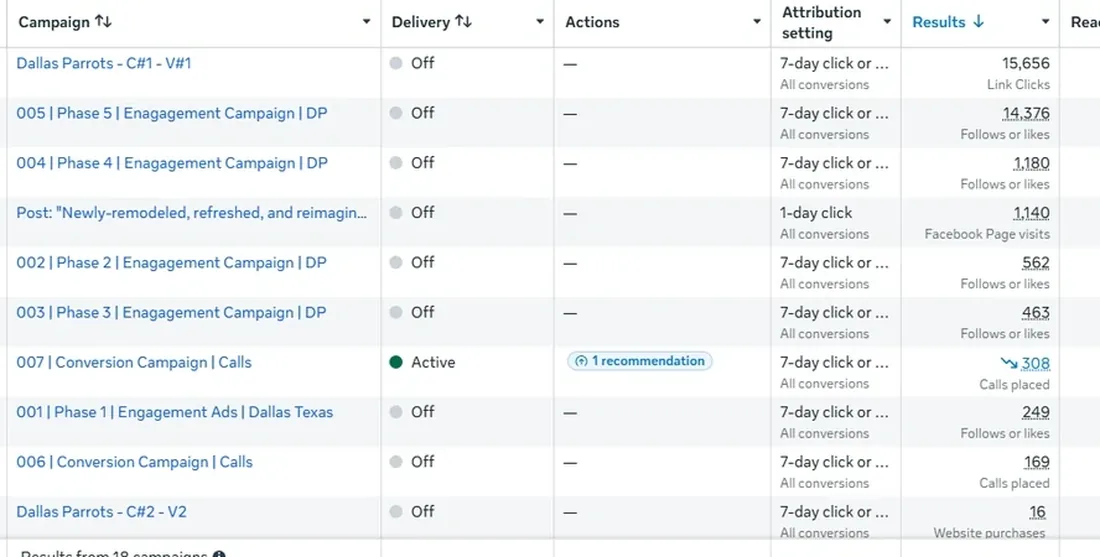
Meta Ads helped introduce products to customers who were not necessarily searching at that exact moment. The account carries both discovery campaigns and campaigns built to produce a call.
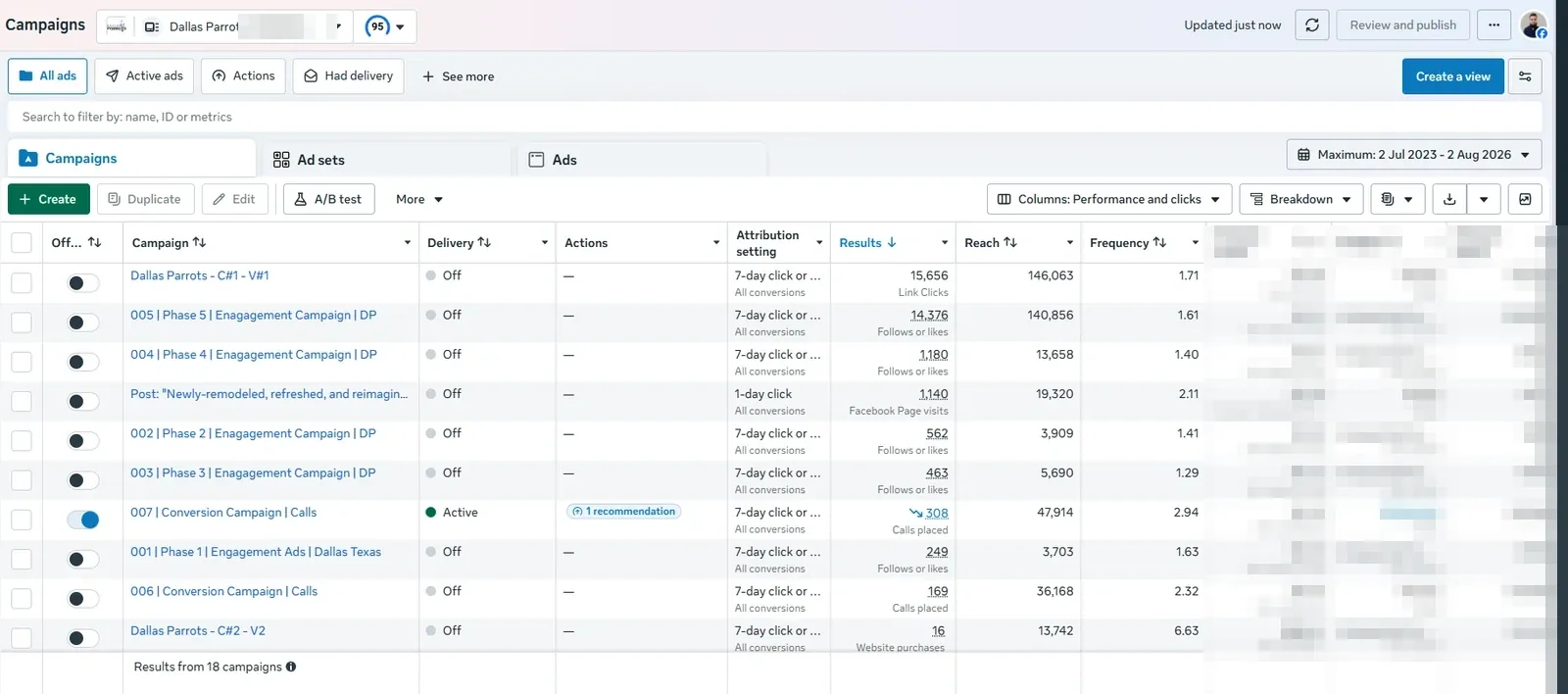
What the campaign list shows
- Engagement campaigns numbered by phase, so the order of testing is visible
- Conversion campaigns built specifically around calls
- A campaign reporting website purchases, which is the ecommerce path
- Creative level campaigns running against the same audience pool
- One campaign still active, the rest turned off after their phase
Campaign management sits inside paid advertising services
Campaign management 01
- Structure by phase
- Objective per campaign
- Delivery monitoring
Audience planning 02
- Product interest groups
- Local reach around Dallas
- Frequency watched per campaign
Creative direction 03
- Product led creative
- Message matched to objective
- Iteration between phases
Routes to a sale 04
- Calls placed
- Website purchases
- Traffic to product pages
Some ecommerce decisions still require a conversation.
A live bird is not a standard cart item. Availability, suitability and care all come up before somebody commits, and the fastest way to answer them is a call. The Meta account carries conversion campaigns built around exactly that.
Why the phone route was worth building around
- Product availability changes and a customer wants it confirmed
- Suitability questions about which bird fits a household
- Care questions that a product page cannot fully answer
- Pickup and local collection details
- Booking or reserving rather than buying immediately
- Purchase confidence on a considered, higher value decision
Call recordings and customer conversations are not published. What is shown is the campaign objective and the contact route on the site
An enquiry still needs a next action.
The purpose of follow-up was to make sure customer interest did not disappear between the website, phone call, message, and purchase decision.
Capture
Everything a customer sends in becomes a record rather than a message somebody has to remember.
- Product enquiries
- Phone enquiries
- Customer questions
- Campaign responses
Status
CRM improvements so an enquiry has a visible state and an owner instead of sitting in an inbox.
- CRM improvements
- Lead and customer status
- Enquiry ownership
- Sales process support
Continue
The part that decides whether interest turns into revenue. A reply, a booking confirmation, or a question answered before the customer moves on.
- Follow-up communication
- Booking support
- Question resolution
- Return to the sales process
The workflow layer behind this is described under customer follow-up automation
Growth required ongoing ecommerce management.
Campaign performance depends partly on the condition of the website and product experience receiving the traffic. That condition does not hold on its own.
Catalogue 01
- Product updates
- Category organization
- Product visibility
- Content updates
Site health 02
- Website maintenance
- Technical fixes
- Mobile experience
- Page condition checks
Campaign surfaces 03
- Campaign landing pages
- Tracking checks
- Message to page match
- Conversion path review
Measurement 04
- Analytics review
- Customer journey review
- Reporting
- Ongoing optimization
Inventory, product sourcing, animal care, pricing, fulfilment and shipping stayed with the business. My side was the digital system that brought customers to those operations and carried their enquiries back.
My contribution across the growth system.
Delivered as part of an ongoing agency engagement. Separating what I ran from what the business ran matters here, because a retail operation with live animals depends on people I never replaced.
The digital growth system
Everything between a customer noticing the business and that customer reaching somebody who could sell to them.
Scope
- Website management
- Website improvements
- Ecommerce support
- SEO
- Technical SEO
- Google Ads
- Meta Ads
- Campaign monitoring
- Product enquiry support
- Phone booking journey support
- Customer follow-up
- CRM improvements
- Sales process support
- Reporting
- Ongoing optimization
Outside my scope
The operation itself. The system only works because these are handled well by the people who own them.
Not mine
- Product sourcing
- Inventory management
- Store management
- Animal care
- Pricing decisions
- Finance and accounting
- Fulfilment
- Shipping
Why this line matters
A campaign can bring a customer to the point of buying a bird. Whether that bird is healthy, in stock, correctly priced and handed over well is somebody else's work, and no amount of marketing substitutes for it.
Why the result cannot be assigned to one channel.
Each channel influenced a different part of the journey. Splitting the revenue between them would need attribution data this project does not have, so no split is claimed.
SEO
May introduce a visitor for the first time, or return one who left without buying.
Google Ads
May capture demand at the moment somebody is actively searching for the product.
Meta Ads
May create discovery, or retarget interest that started somewhere else.
Website
May convert directly, may educate, or may produce an enquiry instead of an order.
Phone conversation
May complete the decision for a customer who would not have completed it alone.
Follow-up
May continue a sale that paused after the first contact.
Ecommerce management
May support product availability and the experience every other channel depends on.
The verified revenue improvement belongs to the combined system. Assigning a percentage to any single channel here would be a guess presented as a measurement.
A stronger commercial system, not one isolated campaign.
What the business has now, stated as operational facts rather than performance claims.
- 01Organic and paid channels both support product discovery.
- 02Website improvements support the product and enquiry journeys.
- 03Google Ads captures active search intent.
- 04Meta Ads supports discovery and remarketing where implemented.
- 05Phone bookings support assisted sales through a dedicated campaign route.
- 06Customer follow-up carries enquiries forward.
- 07Ecommerce management connects campaigns with the website they land on.
- 08Reporting informs ongoing optimization.
- 09Monthly revenue grew from approximately $40K to approximately $126K within one year.
What ecommerce businesses can learn from this project.
Five things this build kept proving, each tied to something that actually happened here.
Revenue growth rarely belongs to one channel
Search, advertising, the website, customer service, and operations affect the same purchase journey.
Product pages need to support questions
Not every customer is ready to purchase without clarification, trust, or assistance.
Phone enquiries should not be ignored
Assisted sales can be an important part of an ecommerce business. Two campaigns in this account exist purely to produce a call.
Advertising depends on the website
A campaign cannot compensate indefinitely for weak product pages, unclear information, or a poor mobile experience.
Follow-up matters after interest is shown
An enquiry without a clear next action can disappear even when the campaign did its job.
Inside the Dallas Parrots growth system.
Real captures from the project, grouped by the part of the journey they belong to. Select any screenshot to open it full size.
Website and product experience
Assisted sales and trust
Paid advertising
Search visibility
Revenue evidence
Services used in this project.
Four service pages cover the layers this build sits across.
The ecommerce website development side. Product discovery, category structure, mobile experience, enquiry routes, and the pages campaigns land on.
SEO and organic growth servicesTechnical SEO, keyword research, product and category optimization, internal linking, metadata, and Search Console monitoring.
Paid advertising servicesGoogle Ads and Meta Ads. Campaign structure, audience planning, creative direction, landing page relevance, and ongoing optimization.
Marketing automation servicesCRM improvements, enquiry status, customer follow-up automation, sales process support, and reporting.
Related case studies
Sixth Sense Martial Arts
Meta Ads connected to a GoHighLevel pipeline, trial booking, follow-up and no-show recovery.
Commercial property, IslamabadBuraq Business Center
Meta lead generation feeding a CRM build with pipeline and workflow structure.
All projectsCase studies index
Every published case study, across ecommerce, property, hospitality, campaigns, and own products.
More context on the person behind the work is on the about page, and the current engagement options are on contact
Improve the full ecommerce journey, not only the ad account.
I can review your website, ecommerce experience, SEO, Google Ads, Meta Ads, product enquiries, phone-sales journey, customer follow-up, CRM, tracking, and reporting before defining the highest-priority improvements.